the social effect
Simon Tooley
US versus THEM
This morning I am off to the streets with my friend Carl. We are off to take photos for INSIDE OUT. What is INSIDE OUT?
INSIDE OUT is a large-scale participatory art project that transforms messages of personal identity into pieces of artistic work. Upload a portrait. Receive a poster. Paste it for the world to see.
Watch this video and then you will get it. That’s what happened to me. That is why I am hitting the streets this morning. (The video is 24 minutes so find the time and take the time.)
It seems really simple to do this. You go to the site for INSIDE OUT, come up with a group name, a statement and a tag.
So here is ours:
Group name: US versus THEM
Statement: Comment vois-tu le monde? (How do you see the world?)
Tag: ATTITUDE
Our idea is to show that there is no difference between the homeless and the rest of us; only our circumstances are different and that inside of us we are all the same. It is really our attitude that makes the difference in how we look at the world and each other.
Cool right? It is not feeling so cool this morning. Carl and I are meeting for breakfast at 8:30 and then hitting the streets to ask people that live on the streets if we can take their photos. Then we are going to ask people like you if we can take yours. Then one day soon you will see your photo next to a homeless persons and people will hopefully ask……? Actually, what will people ask?
The idea was that in laying the photos up side by side we would not know who was living on the street and who wasn’t. Make us wonder who is the “US” and who is the “THEM”.
All I know is right now I am not looking forward to asking anybody to take their photo because I think I am the who is creating the division of “US” versus “THEM” by taking “THEIR” photo.
Let’s see what this morning teaches us.
For more information on INSIDE OUT, click here.
If you would like to participate and have your photo taken, please contact me at simon@thesocialeffect.ca. (You must live in Montreal to participate.)
Walk with me
 I am really tired of writing this blog post. I have been writing one now at this time of year since 1998. Then it wasn’t a blog, it was a letter to my friends. Then it was a fax. Then it was an e-mail. Now, for the last few years it has been a blog.
It always says the same thing:
1. Come walk with me in the AIDS walk
2. Please donate to help the Farha Foundation
3. If you have your own charity you support, then donate to them.
4. Protect yourself: HIV can happen to you.
There are over 33 million people that live with HIV throughout the world
This is not an epidemic this is a pandemic. This is not something we can ignore, put aside, or try to hide from. It is here and it is real and there is no cure. But it is preventable. We must talk about it; we must treat it like any other disease. We must forget the moral implications that surround it and we must reach out to those who have it and embrace them as much as we must ensure that everyone else knows the realities of HIV and AIDS.
Every minute a child dies from AIDS somewhere in the world
This disease is everywhere. We just don’t see it, especially in developed nations. With the stigma attached to this disease, everyone makes sure to keep it well hidden. Or most everyone. Thankfully there are people that speak up. Ron Farha was one of those people. He started the Farha Foundation. But he is only one man in one city. There are many like him all over the world who found the courage and did the same thing. If there hadn’t been men and women like Ron, we would not have the resources that we have today to help those living with HIV.
[Carl Ruscica and I made this video last year for MASKARADE 2011]
There are medications for HIV.
What does that mean to someone who has to take those pills?
What does it really mean?
I work in a clinic that practices aesthetic medicine. I don’t want to tell you how many patients we see each week coming in for treatments so that those around them won’t know that they have HIV because of the side effects from some of the drugs they take.
On Friday night I had dinner with a friend, someone that has had HIV for years and when I went to give him a hug, he said, “Not too hard.” He lives in constant pain. Chronic pain. Sure the drugs are keeping him alive but what most of us don’t understand at what cost. When I say, most of us, I should be saying: anyone out there that is still having unprotected sex and thinks that there are medications to take if you get HIV. There are, but do you want to take them everyday for the rest of your life with all of the side effects that they can have?
It doesn’t seem to matter what we do, people keep getting HIV
I have marched in the streets, and talked on the radio and done interviews in newspapers and written more letters than I care to think about. And so have many of you. And we have to keep doing it. We have to keep doing what we have been doing and finding new ways to get the message out.
So here I go again. On Sunday, September 18th, please walk with me in Ça Marche. If you would like to join our team, please click here.
If you would like to sponsor me, please click here.
If you would like to find out more about the Farha Foundation, please click here.
There but for the grace of God go I
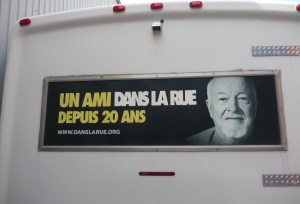 Last Wednesday I did something that I have wanted to do for a long time, I spent the day volunteering at Dans la rue.
What is Dans la rue?
It is an organization that helps street kids. It provides food, shelter, support and guidance when they need it most, providing a consistent source of support and giving youths the confidence to move forward and make positive changes in their lives.
Why have I wanted to do this for so long?
Because I have always felt: There but for the grace of God go I.
What?
No, thankfully with the parents, family and friends that I have I don’t think that I could ever have ended up on the street, but I have learned through being on the board at l’Anonyme a few years ago and the habit I have of stopping and talking with street people, that there are many reasons that people end up on the street and some of them are not at all what you would think.
Get a job!
Homelessness encompasses a range of economic and social factors that have negative impact upon health and well-being. Such factors include poverty, lack of affordable housing, lack of health care supports and social supports — all of which may be understood as problems of social inequality and social exclusion. The chronic nature of these problems is perpetuated by ideological stances that are significantly different at the community, provincial and national levels. While many communities across the country are working to develop and maintain homelessness initiatives, these initiatives are difficult to sustain in the absence of adequate awareness and funding. Dealing with homelessness necessitates collective action, and truly effective collective action demands a pragmatic shift in how homelessness is viewed. With estimates between 150,000 to as many as 300,000 Canadians living on the streets, a movement beyond ideological fixations on “self-reliance” is necessary. It requires an emphasis on equality and inclusivity in the social contract, in civil society, and in the community. (Via Intraspec.ca)
Holding Back the Tears
I arrived at the Dans la rue facility in the east end of Montreal and was given the tour and the history of the place before I was put to work. Sue Medleg, the Development Co-ordinator, told me the story of how Father Emmett Johns, “Pops” – as he is known, started it all back in 1988. She walked me through the place and watched as I did all that I could to hold back the tears as I heard the stories of what they do and what kids do who end up on the street. There is nothing that I did not know or had not heard before, but it doesn’t seem to matter how often I hear these stories that it hurts, it makes me angry, and it makes me sad, and it reminds that that I can still feel.
Hotdog anyone?
After getting the walk through and hearing about the front-line services, I was put to work in the basement.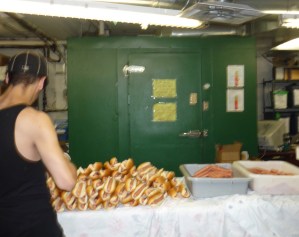 My job was to help get ready a few thousand hotdogs that would get handed out to kids on the street between the ages of 12 and 25 (yes, I said 12) over the next week on The Van. At first it was just me, Jordan and Chris and then Mike that work there. Then, as part of how the program works, kids would come down to help out. We put on our rubber gloves and we took hotdogs and put them in buns, and put them in wrappers and then packed plastic boxes that then got stored in the fridge to be used over the next five nights when The Van went out staffed with volunteers to give out hotdogs, hot chocolate and the services Dans la rue has to help kids living on the streets.
I am not sure that I will ever eat another hotdog. I am not sure that the kids that depend on them each night really want to either.
I can’t stand the pain
For me it was just a few hours. I got pretty good at putting the hotdogs in the buns, into the wrappers and then packing the boxes. They do this every Wednesday to get ready for the week. Often there are volunteers that come in from different companies as part of initiatives to give back to the community. I was lucky as there was no group and so it was just me and the guys that work there and the kids. We talked. We sang along to the words in the music playing in the background. We talked about dogs and tattoos. They asked me if I had a tattoo and I laughed and said, “No, I couldn’t stand the pain.” They laughed with me and told me it wasn’t so bad. They talked and I listened. I fit right in standing there in my shorts and t-shirt except when it was all over I was going to get in my car and go home. For the people that work there they deal with this day in and day out. For the kids that live on the street, this is part of their life. I think it was at that point that I started to go a little numb.
At noon we took a break for lunch. We went upstairs to the cafeteria and lined up and had a burger and a baked potato. All the staff and the kids who are doing some work there get to eat first. Then they open the doors and the kids from the street come in through the side door and they can get a hot meal.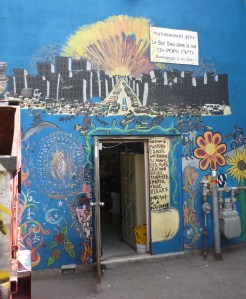 I sat and talked with the staff and watched as the kids came in. They were dirty and tattooed and pierced and hungry. They lined up and they got their food. They sat with their friends and they were polite and respectful of those around them and they ate. I watched as a girl took her baked potato, wrapped it up and put it in her pocket for later. I got a little number.
How long is long when you are living on the street?
We sat and we talked, Chris, Jordan, and Mike. I asked a lot of questions. I asked what was the hardest thing they did. The answer was always a version of, “can’t give enough or can’t help enough.” I heard a lot of caring and a lot of compassion in a place where it must be easy to get hard, to put the walls up to protect yourself.
Then I remembered a kid I had met a few years back one night when I was out on the bus with l’Anonyme. It was a Sunday night about 3 AM and this kid had got on the bus and he was a mess. He had piercing blue eyes that I remember to this day, and dreads, blond dreads. He was upset because his best friend had just died of a drug overdoes. What shocked me was not that his friend had died, but that this kid had a friend that he was so close to and he was so upset about. I didn’t think that people that lived on the streets really had friends. I realized, that I didn’t think that people on the streets were people.
I asked if anyone knew him, I still remembered his name. “It depends who’s asking,” a young woman said who had just sat down beside me. I explained who I was and why I was there. “Yes, he’s still around, he works sometimes in the garden project that I look after. He is doing okay.” I had met him back in 2006 and he is still on the street. That is a long time to still be on the streets.
Don’t you see it?
I have an innocent belief that deep down inside each of us there is a good person full of love. I believe that with all my heart and you will never convince me to think otherwise. What I was reminded of in seeing these kids and in listening to the staff that work at Dans la rue is that for many of these kids, it is pretty hard to see good. Their lives have taken so many twists and turns that it is hard to believe that there is good in anything or anyone. What hit me the hardest is that they very often cannot see that good exists in themselves.
Imagine that for whatever reason, and there are so many, that you are a kid on the street. It may start with a feeling of freedom those first few days, freedom from the situation you were living in, until the money runs out. Until you aren’t able to eat when you are hungry, or have a place to sleep and then you resort to things you never thought you would do. Things that no child should ever have to do. But you do them. And then the good is gone. And it is very hard to get it back. Trust becomes a word you don’t know the meaning of. You become someone you don’t know anymore. You have to hide that person that you used to know. The person that had a chance. That knew deep down inside that there was good, in yourself and in those around you. But that is gone now.
Back to work
We went back down after lunch and we finished getting all the hotdogs ready. There were a few more kids that came down to help. We cleaned up and my day as a volunteer was over. I was going to go home. The people that worked there were going to continue on and then go back tomorrow. And next Wednesday they would be packing hot dogs with someone else. The kids were going to go back on the streets for now. Or some of them that had started to get involved in the different programs of music, or art, or the school that Dans la rue has, 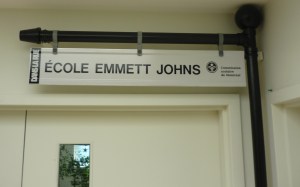 would be back and start to build a future. That is what Dans la rue does, it gives any kid who wants it, a chance again, and a real chance.
Hope
As I was leaving I got a tour of The Van and saw where all those hotdogs will get passed out. I saw where the kids sit and talk and get warm in the winter and have a hot chocolate. I saw the window at the back of The Van 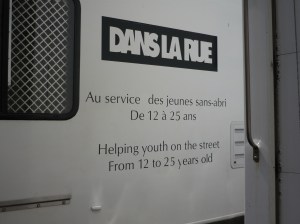 where the street people over 25 get served because Pops knows that you can’t refuse anyone in need. Or at least he can’t. And perhaps that is why this organization works, and these kids trust it and the people that work there. I know I certainly do.
I walked back to my car now completely numb with no real idea of how to deal with what I had just seen. Except then I remembered the hope that was there everywhere I turned. It was there if you wanted to see it, to take it, to have it. And there were people willing to help you see it if you couldn’t.
If you would like more info on Dans la rue, click here.
There are many ways to give to Dans la rue, to find out more, click here.
What is our responsibility?
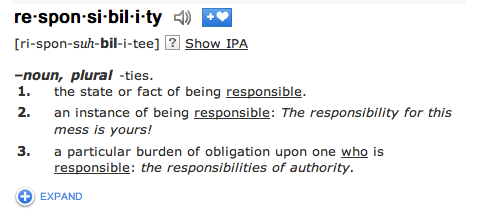 That is a big question isn’t it? I like to ask a lot of questions, it is how I learn. I usually ask too many questions starting with why and I am learning that asking questions with why, does not always lead to an answer.
My question today though is about responsibility: social responsibility, responsibility for sustainability, responsibility to ourselves and more importantly in the end, the responsibility to our children, whether they be ours or someone else’s. As we continue on our journey each day I am learning that we need to continually ask ourselves:
What is my responsibility?
We are not sure if we are coming out of a recession or heading into more trouble. It depends which newspaper you read, which country you live in, and how deeply you want to bury your head in the sand. If we look at what is going on in Europe, between Portugal and Greece, it does not look like we are emerging from anything. If we look at the Horn of Africa we are not only seeing economic hardship, we are seeing human hardship that is beyond comprehension. But is it our responsibility to help those people? Is it not our responsibility to at least care? But what can I do as an individual? And is it up to the individual? If it is not up to the individual we must look to governments and business. With government debt ridden and dealing with unmanageable political and fiscal policies, do we need to look to business for the solutions?
Right now it seems that business is making profit their main focus and responsibility. As a student of economics and a believer in the power of the free market I would argue that for any business, profit is the priority. I believe that Keynesian economics sound good on paper but from what we are seeing in the US for example, it does not seem to be working. Yet, as governments, businesses and individuals are being affected by world economies, our personal and social aspirations become less important than our survival. Survival of course depends clearly on where we live – if we are in Canada or the US our definition of survival is much different than if we are living in a developing country where water, food and shelter top the list.
With the economic austerity that we see pervading our communities it is a good excuse for business to shelve projects, to stop giving to charity and to use economic issues to become only profit driven, either for their own personal gain or to answer to shareholders. I would like to argue that it is those businesses that have a purpose beyond profit that will go the furthest in the end and come out the winners; for themselves and for each one of us.
As business becomes involved in their local communities they see the immediate effect on their bottom line. As companies tackle sustainability, they are seeing more and more what innovation can do to drive growth and profitability. If they are big enough corporate citizens to look beyond their own borders, they see what taking responsibility for transforming tomorrow can do.
So what is our responsibility in the end?
As business leaders, we must accept the responsibility to engage in our communities where we are present as a priority rather than a choice. This approach will ensure long term and sustainable advantages for both profitability and growth. Businesses are in a unique position to make much wider contributions in our communities than we can as individuals.
As employees we have the right and responsibility to ask about the environmental and sustainability policies where we work. What are the human rights policies if our company does work in developing countries? What is the company doing to participate in the communities where it does business? I am sure you can think of more questions related to wherever you work.
As individuals we have the choice each day when we make a decision to buy from a company that is responsible. Our dollars drive profits that these companies are looking for. If each one of use can affect change in our world, the more of us that actually do something with the power we must realize we have, will help to make real differences in our communities.
In the end, each one of us is ultimately responsible in helping to build a healthy, sustainable, and let’s hope, happy society that is socially aware.
Silence is Golden
 Every morning I get on my iPad and I read the newspapers, go through Twitter and then check Facebook – first my personal page and then the other pages that I am administrator for, one of which is The Social Effect. About a week ago, as I was scrolling through the Newsfeed for The Social Effect I came across a post about a Flash Mob Meditation in London. I happen to be a fan of Flash Mobs. I have wanted to take part in one or stage one for years. I can’t tell you how many times I have watched the Oprah Flash Mob in Chicago or the Sound of Music Flash Mob in the train station in Belgium. I am not sure exactly what it is about them, the reference to old style musicals when everyone would break into dance, the simple joy of the onlookers, or is it just that they are a lot of fun! When I saw this idea of meditation and a flash mob THAT caught my intention. Yes, meditation is part of my life. When I am consistent it is morning and night, and when I am not, it is when it is. That simple. To put the two together seemed genius to me. I checked out the site for Med Mob Inquire Within that was the parent organization to see if there was a Meditation Flash Mob in Montreal and found there was only one in Ottawa.
It was almost before I knew it that I had typed and posted an inquiry on the MedMob page to ask how I could go about setting this up in Montreal. By noon that day I had spoken to Patrick in Austin Texas and heard his story about how the first Mediation Flash Mob had started, and by noon the next day, with Patrick’s help, I had a Facebook page and a Facebook event set up. If that does not show you the power of the Internet when we are willing to take action, I don’t know what does!
Is this not the time to create the world we choose to live in?
On July 28th, over 94 cities around the world will meditate in highly visible public spaces. The intention is to expose the world to meditation and expand positivity to every walk of life.
It is an event that is open to everyone, from every path, experienced or not. This is a movement that is happening throughout the entire world so we come together as one unified force to set the momentum for the future of our planet.
Right Here Right Now
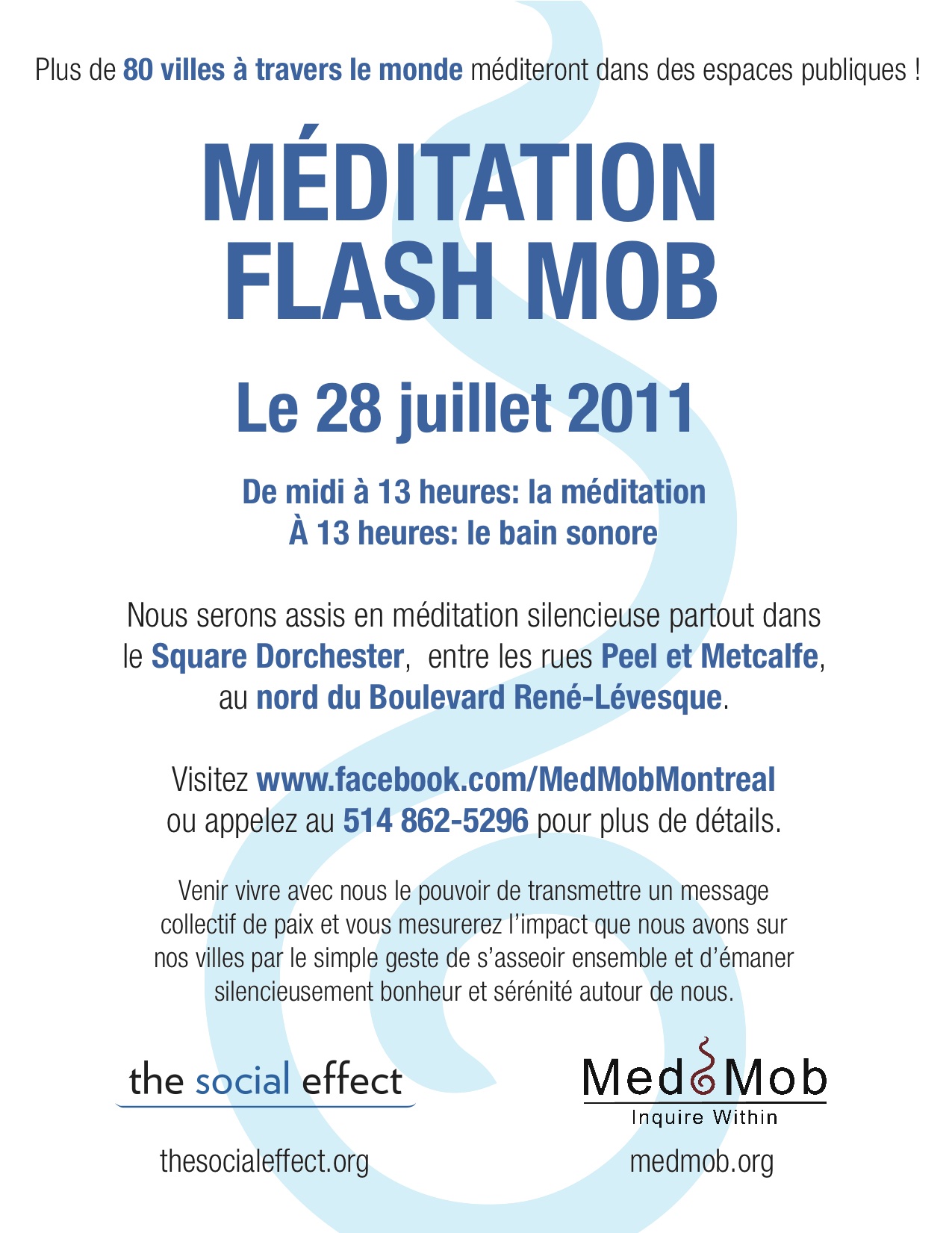
Meditation Flash Mob - Montreal
The future of our planet?
Those are big words.
Huge words.
But think about it.
What if.
All over the world.
At the same time.
Everywhere.
We just.
STOPPED.
All of us.
Just for an hour.
And we sat in meditation.
Or silence.
Or as quietly as we could.
What would happen?
What would we hear?
We will never know until we do it will we?
“I can’t meditate!”
That is what I thought. But that is why they call it the practice of meditation. It is not something we perfect; it is something that we do. And when I do it, I am surprised at what I hear or learn about myself. Not always what I want to hear, and often I don’t learn anything. I always do come away a little quieter, with a little more space and patience and a lot more love for whom and what is around me. I started meditation as I went down a Buddhist path a few years ago, but mediation is part of all religions, some of our western religions just hide it better than others. Now it is part of my life and has no religious implications for me. It doesn’t need to for you either.
So why don’t you join us as we mediate on Thursday, July 28thfrom 12 to 1 in Dorchester Square in Montreal?

Dorchester Square - Montreal
You aren’t in Montreal?
Then see if your city is having a Med Mob and mediate there.
There isn’t one?
You are working and can’t make it?
Sit in silence wherever you are. That works too.
Or do what I did: START ONE. Contact Patrick at inquire@medmob.org.
Spread the Word
Now, I have a favour to ask. I would like to get more people out to our first mediation next week. I have shared the event with all of my friends and many of those attending have done the same. If you are on Facebook, would you share it with your friends? Even if they are not in Montreal. Maybe they have a friend that is, or it will pique their interest and they will find the MedMob going on in their city.
Here is how you do it.
- Click on this link: Meditation Flash Mob Montreal 28/07/11
- On the top right click: I Am Attending
- On the left under the photo you will see a box that says +Select Guests to Invite – click on it.
- A box will pop up with all of your friends. Click on their photos, add a personal message at the bottom if you like and then click submit. It’s that simple.
Right now we are at 40 Attending, 48 Maybe and 466 Awaiting Reply. It would be amazing to see 100 attending and 1000+ Awaiting Reply!
Silence is Golden
You can bring your kids or you can bring your parents, or: BRING EVERYONE! This is going to be a beautiful event that we will all remember. You are welcome to come to the entire event or for part of it. You can meditate the entire time, or you can sit and bask in the peace.
Come experience the power of collectively exuding peace and feel the impact we are having by sitting together, silently radiating happiness and grace in all directions. Simple acts can stimulate major paradigm shifts in thinking and with all we have going on in our world, I am not sure that would be a bad thing.
If you would like to join the Mediation Flash Mob Event on July 28th, click here.
If you would like to join the Montreal MedMob Facebook page, click here.
If you would like to learn more about MedMob Inquire Within, click here.
Take Action and Inspire Change
Take Action! Inspire Change is the theme this year of the 2nd annual Nelson Mandela International Day. This Day is to honour Mr. Mandela and celebrate his achievements towards a non-racial, non-sexist, democratic South Africa, his dedication to the service of humanity in the fields of conflict resolution, race relations, promotion and protection of human rights, reconciliation, gender equality and the rights of children and other vulnerable groups, as well as the upliftment of poor and underdeveloped communities. In November 2009 the United Nations General Assembly proclaimed July 18th as “Nelson Mandela International Day” to be celebrated each year. It is the first time that the UN has dedicated an International Day to an individual.
It is only 67 minutes out of your whole life
Now here is what we all are being asked to do to celebrate: perform 67 minutes of public service – one minute for every year of the South African leader’s own service to humanity.
They are not asking a lot, or are they? I find it interesting that we need to be asked to perform public service as if it is not something that we would think about it on our own. I am thinking I better put it in my to-do list to make sure that I don’t forget, and that I allow for the whole 67 minutes. Is this not something that I should be doing each day? That is too much time I hear some of you say? Is it?
Forget about how much time it is, what exactly does it mean, perform public service. When I read this I sat there dumbfounded. What could I do this Monday for 67 minutes to help others? I thought about my day and all that I had already planned and thought: “It is just symbolic, I don’t really have to do 67 minutes of service. I do a lot all the time.” Do I? Do I do enough?
What is enough?
I think of Mr. Mandela and wonder if he ever thought: “I have done enough.” He is human after all. If he thought that way I am wondering if he would have accomplished all he did in the fight for freedom, justice and democracy.
After I decided I was going to fit in those 67 minutes I couldn’t figure out what I would do. I sat there staring at the screen thinking, I could not come up with one thing to do,
“What can I do to perform service? I don’t have a project going on, there is no event coming up that I am involved with right now?”
Here I am, someone that truly does believe that if each of us does our part we can affect change in our world, and to me ‘our world’ is what is around us, the same way I am sure Mr. Mandela was thinking of ‘his world’ as he fought for human rights.
67 Ways to Change Our World
Thankfully these days we don’t need to look very far for answers to anything and the answer to how I could spend those 67 minutes found me in a blog post. I don’t think I could come up with a better list than these 67 suggestions from Natalie Govender in her blog on HUDDLEMIND: 67 Ways To Change Our World (posted on July 15th, 2011).
Here is what I am going to do
I am going to make Monday not about ME. I am going to do all those things that I say I am going to do for others that day, those small things, those things that I don’t think matter, that matter to those I do them for. Then I am going to move forward on two projects that I have started – one on meditation and one for the homeless.
What are you going to do to celebrate?
Is it going to be doing the dishes or taking out the garbage?
Is it calling that friend who is going through a rough time and you just don’t want to hear about it?
Is it finally calling that charity to offer to volunteer.
Is it making a donation?
Is it making a conscious decision to speak up for something you believe in?
Is it simply remembering: that giving is doing service and we are able to do that in each of our daily actions no matter how big or small those actions may be.
Now, what I would love to hear is what YOU are going to do on Monday, July 18th to celebrate Nelson Mandela International Day. I have made the commitment, now it is your turn. There is a comment box down below. Put it in writing. Make it real. And remind yourself as I am reminding myself; we could make this commitment every single day.
For more information on Nelson Mandela International Day, click here
Or join their Facebook page, click here
In the name of love
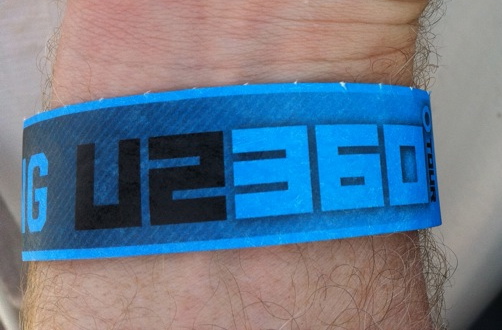 That is really why I did it, why I signed up to be a volunteer for ONE. It had nothing to do with U2 or Bono or The Edge.
But let’s go back a few months to when I received an e-mail from ONE Campaign asking if, as a member, I would like to volunteer for the Campaign at the U2 360° Tour in Montreal in July. I didn’t hesitate and I sent off an e-mail telling them a little bit about myself and pretty much forgot about it. Then in the middle of June as the buzz about the concert started in full force here in Montreal I remembered I had volunteered and assumed that I must not have been picked. And as seems to happen more often than not, the next day, on June 16th I received an e-mail from Maura telling me that “I would be joining them on Friday, July 8th”. Simple, just like that.
I was told I would receive the info of where to go and to look for an e-mail on the 7th with details. Now I have to tell you, I was not a Bono fan, U2 fan, nor did I even know who The Edge was until I arrived at the site on Friday. You notice I said, was not, because I am now.
But I am getting ahead of myself. I cleared my day on the 8th and on the 7th I found myself checking my e-mails a little more often than usual. Earlier than expected, the e-mail from Maura came in telling me where to go and a follow up e-mail that we needed to be there at 2 pm. There was the usual info for any outdoor event about wearing sunscreen, comfortable shoes and then NOT to bring professional cameras. I guess some people volunteer for different reasons than mine.
It was all over the news about how bad the traffic would be and to take the metro and I of course was late so I hopped in a cab and had no traffic problems and arrived at the corner of the site with the police and the concert goers who were getting off the metro in droves at 1:45 PM. They were expecting 80,000 people and there were some who had been camping out since the day before.
A rock concert virgin
I have to tell you a secret: THIS WAS MY FIRST ROCK CONCERT! Yes, at 48, I had never been to a rock concert so I was not sure what I was in for. I made my way in with all of the fans in their “we love U2” t-shirts”, getting lost, something I am very good at, until I finally found the other volunteers trying unsuccessfully to find some shade under one very thin tree.
As we introduced ourselves I saw that we were certainly a mixed group in age, languages spoken and nationality. Appropriate for an organization that is all over the world with its only goal to fight extreme poverty and preventable diseases. It was not too long before Maura came, introduced herself, and moved us down to our home base near the site.
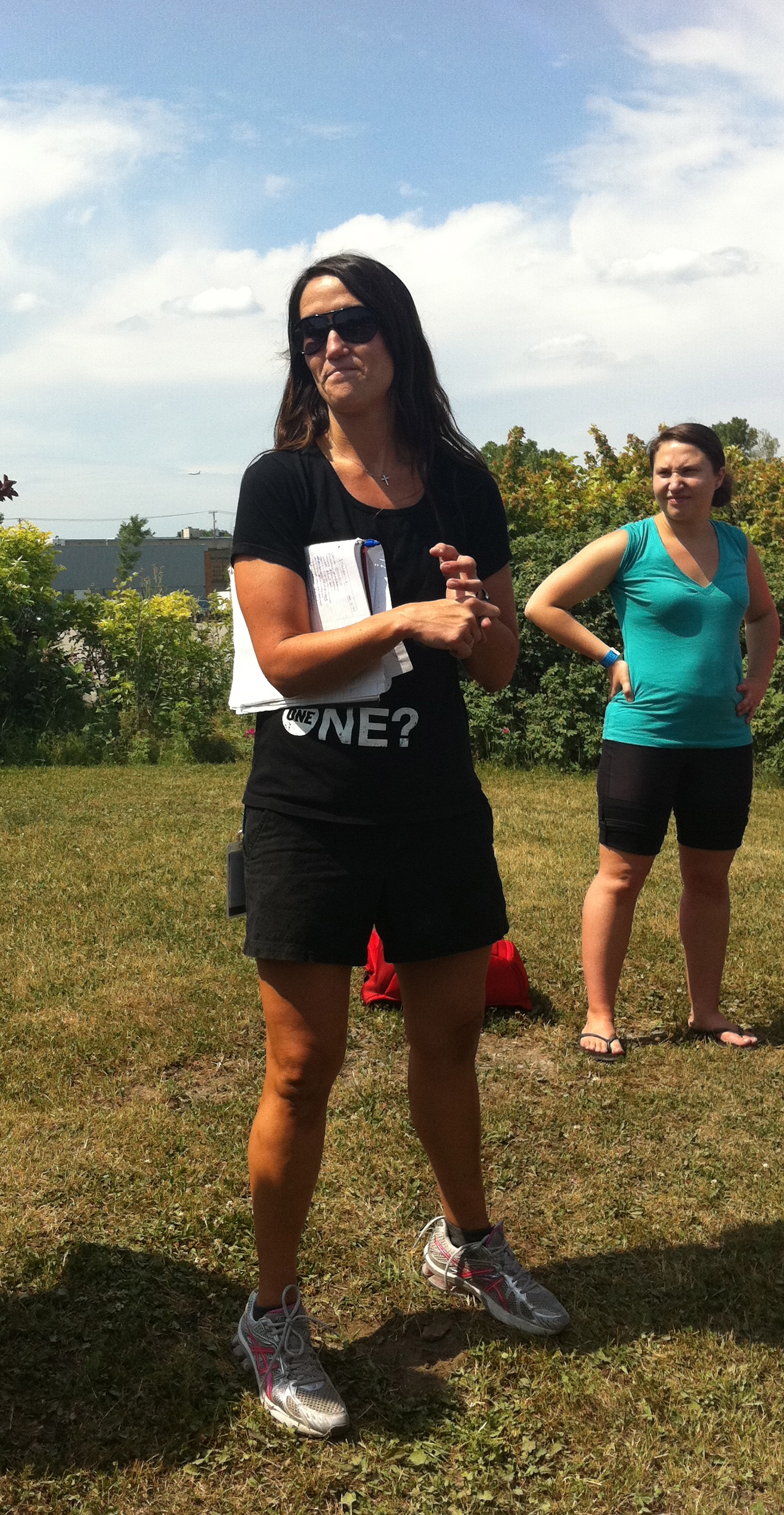
Maura - our amazing ONE team leader
We’re not asking for your money, we’re asking for your voice
We were given our ONE t-shirts and then given the instructions on why we were there: to sign up new ONE members and what we would be doing over the next few hours
For any of you that don’t know, here is what ONE is all about:
Maura was amazing, not only did she know her stuff and what we would need to know, she knew how to make us feel comfortable and feel part of ONE right away. She also was able to make us see the importance of what we were going to be doing and that each of the inscriptions we got would make a difference. I was reminded again that each of us has a voice and we have to use it. With over 2.5 million members ONE has a real voice in making change in our world.
We were given our elevator speech about ONE as we only had 3 ½ hours to collect as many names, e-mails and postal codes as we could and our goal was to beat Nashville where they had collected 4,000 names. We were also told that we each needed to get at least 100 names to have our place in the Inner Circle for the show. I was laughing to myself as I did not even know that we were going to get to see the show. At least you know what my motives were in being there! We were also told that the top five, WOULD GET TO GO ON STAGE. You should have seen our faces! What a great incentive to get us all going. It certainly worked for me – a chance to go on stage in front of 80,000 people and see what that was all about? WOW!
We were handed our iPads, yes, we each had an iPad, that had a ONE screen that explained the latest petition, which is about vaccines for pneumonia and diarrhea which are still killing children in Africa – something we cannot even fathom here in North America. The touch screen had three slots to fill in: NAME, E-MAIL, and POSTAL CODE. Easy enough I thought.
GET LOUD and USE YOUR VOICE
Armed with our iPads and a lot of enthusiasm, off went 30 passionate new ONE volunteers to tackle the U2 fans. And tackle them we did!
At 7:30 PM we all headed back, hot, sunburned and feeling like we had not done enough. Feeling like we could have signed up one more, understanding that one more signature on the next petition could make a difference.
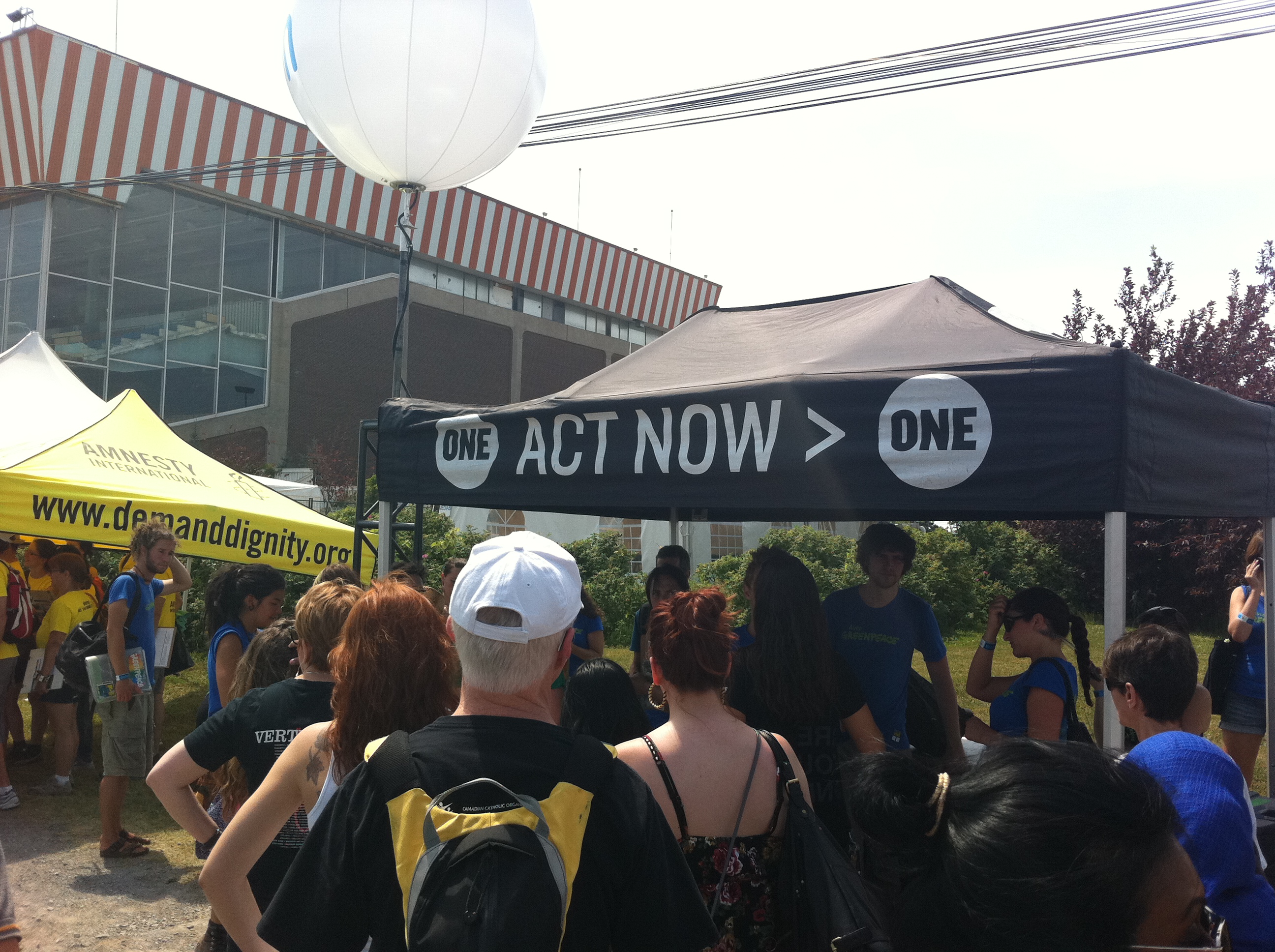
ONE Kiosk
I was able to sign up 145 people and I can tell you, for an Anglophone from Winnipeg who must have talked to at least 175 people – no not everyone said yes believe it or not, 165 of them were Francophone. For those of you who know the French language you know how easy it is to mix up ‘G’ and ‘J’ – why couldn’t Quebec have postal codes started with ‘T’! There were some very patients fans out there I can tell you!
We came back with 3,382 new ONE Members! Shy of what our goal was, we were assured that we had helped, and that it really is what ONE is all about. It is the idea that each one of us can make a difference if we speak up, if we assume the voice and place that we have. As the wrist bands that we handed out to new ONE members said: GET LOUD and USE YOUR VOICE!
It’s a beautiful day
We handed in our iPads and gave in our numbers and all of us of course had access to the Inner Circle to watch the show, and the top five and another five drawn at random were picked to go on stage. Did I make it? You bet I did, by the skin of my teeth! David and I tied at 145 and they let us both join the group. I felt a little guilty as not being a true fan I wondered if I should give my place up. But the idea of being on stage in front of so many people intrigued me.
Next stop for us was training for what we would do on stage. Allison was our patient trainer who whipped us in to shape to be ready. Off we went to the Inner Circle to see the show with clear instruction on where to be and when to be there. We were NOT to wear our ONE t-shirts as we would be doing this with the Green Peace members and Amnesty International members who had been on site that day as well. As we really are all one, looking to accomplish similar goals, we did not need to make ourselves different from each other.
The Inner Circle
There was absolutely no better vantage point to see the show than where we were. We were right under the rocket ship and between the main stage and the outer circle stage that I would end up going out on 14 songs later. For a first time rock concertgoer, it was amazing to saw the least.

The Inner Circle under The Rocket Ship
The show started at 9 PM and I watched and listened and started to get into it like the fans around me. I kept waiting for the song that would be the signal for us to go back stage. I watched Bono as he did his thing, as he worked the crowd and as he gave it his all. I have to say I was impressed that he did so much of the show in French, not something that always happens even in Montreal.
Walk On
Finally the signal came and we all made our way over to the backstage area. Security checked and double-checked our wristbands to make sure we had access. We were given our lanterns that we would carry on stage with us. We got in our lines and we waited for our cue.
I felt like I was getting cramps in my legs and the cue came and the cramps were gone and I walked up the stairs to the stage. Then the tap on the shoulder for me to walk on came and I went to the front of the stage. We were told to keep our eyes on the person behind us to be ready for our cue to leave but how could I help but look out at the 80,000 fans with their arms in the air? How could I not feel the power of the words that I heard Bono singing behind me? How could I not then at that moment, truly understand what ONE meant?
The cue came and I placed my lantern on stage and walked off, feeling the power of the energy that was there and more importantly feeling the power of possibility.
Goosebumps and Tears
I looked up at the screens as I got to the back stage area and I saw the messages that were being projected. I looked at Bono and his band and I saw that they got it. I stood there with goose bumps and a few tears in my eyes knowing that I had been part of something bigger than I was.
It was only a concert you say? Was it? I heard that crowd as Bono sang Walk On and I heard the words he sang:
And if the darkness is to keep us apart
And if the daylight feels like it’s a long way off
And if your glass heart should crack
And for a second you turn back
Oh no, be strong
Walk on, walk on
What you got they can’t steal it
No they can’t even feel it
Walk on, walk on…
Stay safe tonight
The song was written about and dedicated to Aung San Suu Kyi. It is written in the form of a supporting, uplifting anthem, praising her for her activism and fighting for freedom in Burma. She had been intermittently under house arrest since 1989 for her efforts. If those words touched one more person, if in signing up 3,382 people one of them does something to affect change, if you from reading this decide to do something, then it was certainly more than a rock concert wasn’t it?
For more information about ONE or to become a ONE member, click on the link: ONE.
The Human Network
 We talk these days a lot about networks, platforms and technology, but what are we really talking about? Are we talking about Facebook, Twitter, and YouTube or are we talking about what goes on behind these networks?
Down by the river
I finally understood what these networks were all about after being on holiday in Dominica. Dominica is an island in the Caribbean where there are a reputed 365 rivers, one for each day of the year.
Let’s go back a few years when there was no running water, or washing machines and no cell phones and texting for sure. Let’s go back to when the river was the social network, when it was the meeting place for everyone. The women would go to do the washing there and meet everyday. They would talk, share stories and gossip. If you couldn’t go you would miss the news of what was going on, and risk being the centre of the gossip. The men would fish or go to meet the women there, and the children would play in the water. A complex social network developed where families and friends would meet and share. I am no anthropologist, I am giving you a very simplified story of what the rivers meant on Dominica and you could substitute a market place in Morocco or Paris or a village in Africa. Or let’s come closer to home to a front porch, a coffee shop, a church on Sunday, or the baseball diamond or hockey rink; when our extended families were not so extended and we lived in the same house, same neighborhood, or at least the same city.
When we met what did we do? We told stories. We told each other what had happened to us, what we thought was going to happen to us and what we hoped would happen to us. That started to change as we went away to school, we went away for jobs, we travelled more and we settled all over the world. The telephone helped keep us connected and then eventually the Internet and the World Wide Web.
Reach Out and Touch Someone
At first of course this thing called the World Wide Web was for transmitting data. Then those computer geeks started to talk to each other. Then they let us join in and we did. As computers and the Internet became more accessible, business started to see it as an opportunity to reach more people, make more money, market themselves. They took the same marketing materials they had always made and put it on the web; and it didn’t work. Products didn’t sell; people didn’t stay on their sites. They had to learn how to talk to us. We had to learn how to talk to each other again, and we did.
What did you say?
The social network started long before there was Facebook or any of the other networks we know today: YouTube, Twitter, Stumble, LinkedIn etc. What these social networks have done is bring us back to the river, to the market to the souk, to a family-get- together to each other. They bring us back to community. They bring us back together: period. These networks allow us to tell each other stories, to give and share and to inspire; to have conversations with each other again.
When do these networks work? When they allow us to tell stories and share conversations that are real, when there is meaning behind them and we know, see and feel that they are authentic. Everything works when there is a human network, and when that network is 10% of the solution and the people are the rest.
Are you juicy?
I heard this a few years ago at a conference called The Power Within from a woman named Loretta Laroche. She is an acclaimed speaker, consultant, author & TV personality who gives talks and makes us laugh at ourselves. Or at least she made me laugh at myself. She spent the hour on stage talking about stress and what we do and don’t do to make it better and how humour can help in our lives. If any of you have seen or heard her I know that you laughed even if you did your best not to as I saw many of the men in the audience ‘trying’ to do. Us men are always the last to give in. “I am not going to laugh, she is not really funny…..” and then we finally let out a guffaw from holding in all the laughter.
There are three things that I took away from her talk:
1. Don’t take life or yourself so seriously. Get rid of that pinched up, not smiling, I know it all face and laugh a little.
2. This I do every morning. I come down the stairs, okay, sometimes I bound down the stairs when I am in an especially good mood and jump into the dining room, throw my arms into the air and say, “TA DA!” What that means is: “Here I am world, get ready for me. Watch out because I am right around the corner!”
If you don’t think that starts my day on a positive note I can tell you!
3. BE JUICY. That’s right. Next time someone says, and someone will say this to you every day: “How are you?” Mind you half the time they are not really listening or seem to realize they are even asking. Look them straight in the eye and say, “I AM JUICY!”
Is life not filled with so much joy and laughter and possibility, is it not really JUICY!
“BUT…” you say, “I have problems, I have all kinds of things going on in my life, I I I……” You know what I am going to say to all of that: STOP IT!
So next time, someone says, “How are you?”
Answer, “I am JUICY!”
What is the worst that can happen?
1. They laugh.
2. You laugh.
3. They look at you funny and laugh.
4. They look at you funny and you laugh.
Get the picture? So far none of the above seems like a bad thing to me.
Have a JUICY day!
One to many becomes many to one
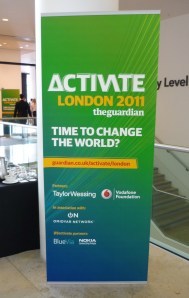
Activate Summit - King's Place London
My trip to London ends today and I head home tomorrow. To say that it has been an awesome trip would be an understatement.
awe·some
adjective /ˈôsəm/
- Extremely impressive or daunting; inspiring great admiration, apprehension, or fear
▪ – the awesome power of the atomic bomb
- Extremely good; excellent
▪ – the band is truly awesome!
It has definitely been like an atomic bomb going off in my head because of everything that it has released in there. What I would like to do here is give you a short recap of what I learned at the Activate Summit. The idea being that in my sharing what I have learned, something may inspire or encourage you to do something with this information to affect change somewhere in your life, your family, your community, or on a larger scale.
Activate is all about examining the influence of technology on global society in areas as diverse as media, commerce and economics, the environment, energy and sustainability, citizenship, democracy, governance and accountability, the developing world, healthcare, education, science and humanity.
Not a very tall order is it? It succeeded as far as I was concerned because a seed was planted, many seeds, not only for the possibility of change, but also for the possibility of sharing of ideas, successes and failures. The underlying message was: we must do something with what we have learned; at the end of the day that is key. It is wonderful to have all of this knowledge, but our responsibility is to make it actionable.
Talking and doing
We have all kinds of content out there now, but what is the service that is going to go with it? We have learned to make our physical world accessible to those around us, now we must make this informational world accessible as well. Content for content’s sake has no value.
Life is a story
With all the information that we have, we need to decide what to do with it if we are to affect change with it. This information must be searchable and accessible, but we need to be able to have storytelling around this data so that we may ask the right questions to be able to come up with the right answers. What am I talking about?
Jonathan Simmons from Public Zone explained it very clearly:
Information (data) is fuel.
The technology, apps and social media platforms are the vehicles.
The people (you and me) are the drivers.
This information that is out there is the new oil (the fuel) , and we need to be able to protect and look after it, as in the end, it will be this information that lets us save ourselves and our world.
Anyone can be a Think Tank
The underlying message in each and ever conference or break out session that I went to was that it all comes down to people, you and me, to make a difference. Did I have to come all the way to London to hear that? You are thinking, “I could have told you that!”
I wonder.
It seems to me that these days we are all so tied up with technology, myself included, that we forget that the real power comes from each and every one of us. What I saw here and what I am hoping to be part of is change on a global scale, but let’s step back a little to our own lives and our own small worlds. What if we looked at our individual actions and the power they have to affect change with those around us? If we remembered to keep our principles and values true to ourselves; the rest will follow.
One to many becomes many to one
Agency is the capacity of an agent (you and me) to act in our world. How we act affects those around us. If we think small, we will live small, if we open ourselves to the possibilities that are out there, the realities become very different.
If technology, the Internet, Social Media, and apps are simply tools to bring us all together, only tools, they will not solve our problems. If we use these tools to connect, to remember we are global citizens, then the opportunities we may create are endless.
For more information on the Activate Summit and to watch the videos of the keynote speakers, here in the link: Activate Summit London 2011
 the social effect